
T: +86-400-0987187
E: info@sdjinmai.com
E: info@sdjinmai.com
No. 6888 Jiankang East Street, High-tech Zone, Weifang, Shandong, China

Views: 0 Author: Site Editor Publish Time: 2026-04-27 Origin: Site
In modern crop production, growers are expected to achieve more than simple plant growth. They want stronger roots, healthier structure, higher fruit set, improved quality, more uniform ripening, and better yields under increasingly complex farming conditions. At the same time, they must deal with changing climates, variable soil conditions, labor pressure, market demands, and the need for more precise input management. In this context, many growers are asking a practical and important question: what do plant growth regulators do?
Plant Growth Regulators, commonly known as PGRs, are specialized agricultural inputs used to guide and optimize crop development. Unlike conventional fertilizers, which mainly provide nutrients to support plant growth, PGRs influence the way plants grow by acting through signaling. In other words, they help direct plant physiological processes. This makes them highly valuable in precision agriculture, because they do not simply feed the crop—they help shape the crop’s developmental behavior.
When used correctly, Plant Growth Regulators can promote root growth, control excessive elongation, improve flower and fruit retention, balance vegetative and reproductive growth, shape plant architecture, increase fruit set, and support more uniform ripening. These effects are especially important in commercial agriculture, where both yield and market quality matter. A crop that grows too aggressively, sets fruit unevenly, or ripens inconsistently may not perform as well economically even if it receives enough nutrition. That is where PGRs can play an essential role.
Today’s growers do not want random stimulation. They want intelligent crop management. They need products that work at low dosages, fit into complete nutrition programs, and provide targeted physiological benefits. High-quality PGR formulations are designed exactly for that purpose. Made with high-purity active ingredients and precise compositions, they are used not to replace fertilizers, but to complement them. Their goal is to help crops grow in a more productive, balanced, and commercially desirable way.
This article takes a close look at what Plant Growth Regulators do, how they work, why they are different from ordinary fertilizers, what practical benefits they offer in crop production, and why they have become an essential tool in precision farm management.
Plant Growth Regulators are crop management products designed to influence natural plant development. They do this through signaling rather than through bulk nutrient supply. That difference is central to understanding their role. Fertilizers provide essential elements such as nitrogen, phosphorus, potassium, calcium, magnesium, or trace elements. Plants need those nutrients as building materials for growth, metabolism, cell development, and reproduction. PGRs, however, work differently. They help regulate how that growth is expressed.
This means that even when a crop is well fertilized, it may still need regulation. A plant can have access to enough nutrients and still grow too tall, become overly vegetative, struggle with root establishment, retain flowers poorly, or ripen unevenly. In those situations, the problem is not necessarily a lack of nutrition. It may be a matter of physiological balance. Plant Growth Regulators are used to improve that balance.
Because they act through signaling, PGRs are typically effective at minimal doses. Their value lies in precision. They are not meant to push growth blindly. Instead, they help guide the plant toward a more efficient development pattern. For that reason, high-quality formulations focus heavily on purity, stability, and safe action. When properly formulated, they support crop development gently and effectively, without causing unnecessary phytotoxicity risk.
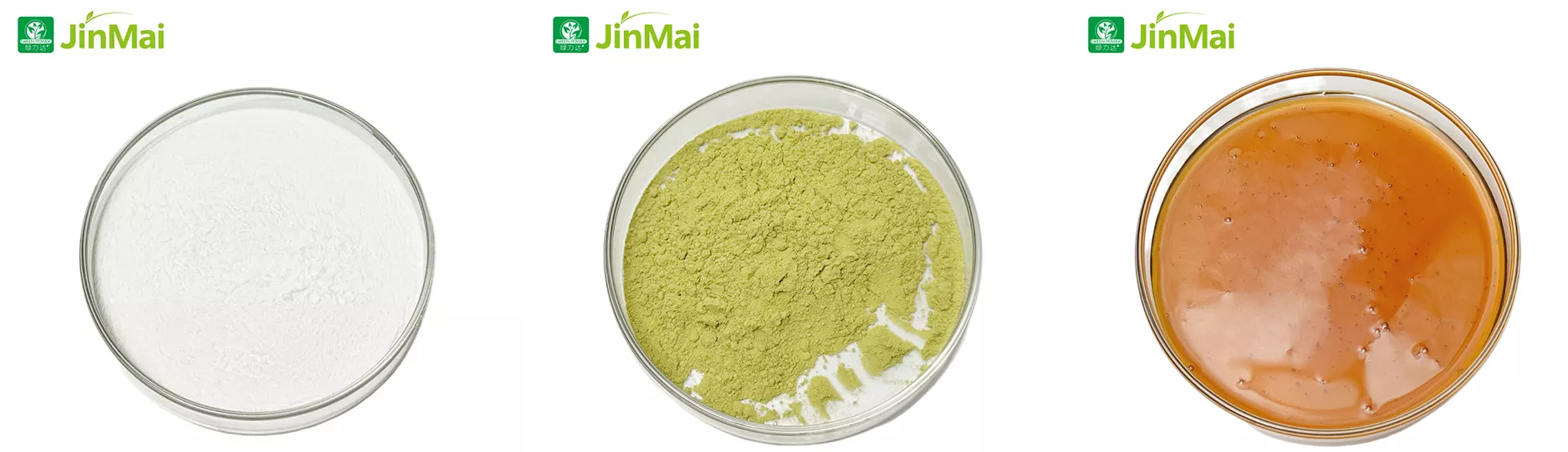
To answer the question clearly, Plant Growth Regulators help control and optimize the way plants grow and develop. Their role is not limited to one single effect. Instead, they offer a range of physiological benefits depending on crop stage, plant condition, and production objectives. The most practical way to understand what PGRs do is to examine their major functions in real agricultural settings.
One of the most valuable things Plant Growth Regulators do is support root growth. A strong root system is the foundation of crop performance. Roots are responsible for water uptake, nutrient absorption, anchorage, and tolerance to environmental fluctuations. When root development is weak, even a well-fertilized plant may struggle to use available nutrients efficiently.
PGRs can help stimulate root activity and encourage a stronger root system, especially during early establishment and active growth periods. This is especially helpful in transplant production, seedling establishment, greenhouse cultivation, and other systems where early vigor matters. A crop with stronger roots is often better positioned to handle stress, maintain steady development, and sustain later reproductive demands.
In commercial farming, early root performance has long-term consequences. Better root growth can improve nutrient efficiency, support more uniform development across the field, and create a stronger base for later flowering and fruiting. That is why root promotion is often one of the first key benefits associated with PGR use.
Another major function of Plant Growth Regulators is controlling excessive elongation. In many crops, especially under favorable environmental and nutritional conditions, plants may produce too much vegetative growth. Stems may become overly long, plants may stretch excessively, and crop structure may become less compact and less efficient.
At first glance, vigorous growth might seem positive. However, excessive elongation can create several problems. It may weaken structural stability, reduce airflow, increase shading, complicate field management, and shift too much energy toward stems and leaves instead of reproductive growth. In some crops, overly vegetative plants are less efficient producers.
PGRs help address this issue by guiding growth into a more balanced form. Instead of allowing plants to expend too much energy on unproductive elongation, growers can use Plant Growth Regulators to shape a stronger, more compact, and more manageable crop structure. This can lead to better canopy performance, improved light distribution, stronger stem quality, and more effective reproductive development.
One of the most important answers to the question “what do plant growth regulators do” is that they help plants maintain balance. Crops are constantly dividing resources between vegetative growth and reproductive growth. If too much energy is directed toward leaves, stems, and canopy expansion, reproductive performance may suffer. If reproductive demand becomes too strong before the plant is ready, crop development may also become unbalanced.
PGRs help manage this relationship. They guide the crop so that vegetative growth and reproductive growth develop in a more coordinated way. This balance is essential because yield and quality depend not only on how much the plant grows, but on how efficiently it transitions into flowering, fruit set, and maturation.
In practical terms, better balance often means the plant can build sufficient biomass without becoming excessively vegetative, and it can support flowering and fruit development without exhausting itself prematurely. For many commercial growers, this is one of the most valuable benefits of PGRs, because crop balance is directly tied to yield stability and product quality.
Many crops produce abundant flowers, but not all of those flowers become harvestable fruits. Flower drop and poor fruit retention are common problems in crop production, especially under stress, nutrient imbalance, or weak physiological management. This is another area where Plant Growth Regulators are highly useful.
PGRs can help improve flower retention and fruit retention by guiding the plant toward a stronger reproductive response. When used during the right developmental stage, they help reduce unnecessary loss and support more efficient conversion of flowering potential into actual productive yield.
For growers, this benefit has clear economic importance. Better flower and fruit retention often means greater yield potential, more stable production, and better use of the plant’s natural capacity. In fruiting and flowering crops, this function alone can significantly improve overall performance.
Closely related to retention is fruit set. Fruit set is a crucial stage because it determines how much of the reproductive potential becomes actual crop output. A plant may flower heavily, but if fruit set is weak or uneven, final yield and uniformity may still be disappointing.
Plant Growth Regulators can help improve fruit set by supporting the physiological conditions needed for a more successful transition from flowering to fruit development. This is especially important in commercial systems where consistency matters. Uniform fruit set helps growers achieve more predictable harvest patterns, better fruit sizing, and stronger market value.
Improved fruit set is not only about higher numbers. It is also about better distribution of productive growth across the plant, leading to more balanced crop development and greater harvest efficiency.
Plant architecture refers to the overall structure of the crop, including stem growth, branch balance, canopy shape, and the spatial arrangement of productive tissues. Architecture is not just an aesthetic issue. It affects light interception, air circulation, pest and disease environment, ease of management, and final quality performance.
PGRs help shape plant architecture by regulating how the plant grows during key stages. They may support a more compact canopy, stronger branching balance, improved reproductive exposure, or more efficient plant form. Good architecture can increase operational efficiency and reduce management problems in both open-field and protected cultivation systems.
This is one reason why PGRs are widely valued in precision agriculture. They allow growers to influence not only growth rate, but also growth pattern. A crop with better structure is often easier to manage, easier to harvest, and more efficient in converting resources into commercial output.
Uniform ripening is a major goal in many crops, especially when appearance, timing, and harvest efficiency affect profitability. Uneven ripening can complicate labor planning, delay harvest, reduce market grade, and create inconsistency in quality. Plant Growth Regulators can help promote more synchronized crop development, contributing to more uniform ripening.
This function is especially valuable in modern production systems where growers need predictable harvest windows and consistent product presentation. By guiding crop development more evenly, PGRs help reduce variability and improve commercial management.
Uniform ripening also supports supply chain performance. When crops mature more evenly, it becomes easier to coordinate picking, packing, transport, and market delivery. From a business perspective, this is one more reason why Plant Growth Regulators have become important beyond simple agronomy.
A common misunderstanding is that PGRs are simply another kind of fertilizer. They are not. The difference lies in both function and purpose. Fertilizers feed plants by supplying nutrients required for growth and metabolic processes. Without those nutrients, plants cannot build tissues, produce energy efficiently, or complete their life cycle.
Plant Growth Regulators do not replace that nutritional role. Instead, they influence how plants use their growth potential. If fertilizers are the building materials, PGRs are part of the management system that helps organize how those materials are used. A crop may have enough nutrition and still need guidance in terms of root development, elongation control, reproductive balance, fruit set, or ripening uniformity.
This is why PGRs are best described as complements to complete nutrition programs. They work most effectively when crops already receive sound agronomic support. A well-managed nutrition program provides the foundation, and Plant Growth Regulators help fine-tune the crop's development for better agronomic and commercial results.
One notable characteristic of Plant Growth Regulators is that they work efficiently at very low dosages. This often surprises growers who are more familiar with conventional fertilizer application rates. The reason is that PGRs act through signaling, not through bulk feeding. Their role is to trigger or guide plant responses rather than to supply large quantities of nutrients.
This low-dose efficiency is one of their greatest strengths. It allows growers to manage crop development more precisely without relying on heavy input volumes. However, it also means that product quality matters greatly. High-purity active ingredients, precise formulation technology, and stable composition are essential for ensuring that the crop receives a safe and consistent signal.
Well-formulated PGRs are designed to act gently, support target responses, and minimize phytotoxicity risk. In commercial agriculture, this makes them particularly useful for growers seeking targeted performance improvement without unnecessary stress to the crop.
Modern agriculture is moving toward greater precision. Growers increasingly want to manage not only how much input is applied, but also how effectively each input contributes to crop performance. They want better timing, better targeting, and better return on investment. Plant Growth Regulators fit naturally into this trend.
PGRs are valuable because they help growers make more intentional decisions about crop behavior. Instead of accepting whatever growth pattern develops naturally under a given set of conditions, growers can guide the crop toward a more desirable outcome. That may mean better root structure, a more balanced canopy, stronger flower retention, or more uniform ripening.
This precision approach is especially important in high-value crops and intensive production systems, but it is also increasingly relevant in broader commercial agriculture. As growers seek more control over quality, uniformity, and productivity, Plant Growth Regulators become an essential management tool rather than a niche input.
Although the exact timing depends on crop species and production goals, growers commonly use Plant Growth Regulators during several key developmental stages.
At this stage, PGRs are often used to support root growth and early crop vigor. Strong establishment lays the foundation for everything that follows.
During vigorous vegetative growth, PGRs can help control excessive elongation, improve plant structure, and reduce imbalance between canopy development and future reproductive performance.
This is a critical stage where PGRs are often used to improve flower and fruit retention, enhance reproductive efficiency, and increase fruit set.
At later stages, Plant Growth Regulators may be used to help create more uniform maturation and improve harvest consistency.
These timing windows show clearly that PGRs are not generic stimulants. Their role depends on the developmental stage and the specific crop goal. That is why their use is closely associated with precision farm management.
When growers ask what Plant Growth Regulators do, they are often really asking what benefits they can expect. In practical terms, the benefits usually include better root development, more balanced crop growth, improved structural management, stronger reproductive performance, better fruit retention, higher fruit set, and greater ripening uniformity.
These benefits combine to support better crop quality and stronger commercial outcomes. More efficient plant architecture can improve light use and airflow. Better reproductive balance can reduce wasted vegetative growth. Improved retention and fruit set can strengthen yield performance. Uniform ripening can simplify harvest and improve market presentation. Together, these advantages explain why PGRs are increasingly seen as strategic tools rather than optional add-ons.
Despite their value, Plant Growth Regulators are sometimes misunderstood. Some people assume they are growth boosters in the simplest sense, but that is too narrow. Others think they are substitutes for fertility programs, which is incorrect. Still others see them only as tools for reducing plant height, but that also misses the broader picture.
The truth is that PGRs are crop guidance tools. They do not simply make plants grow faster, and they do not replace basic agronomy. Their true value lies in helping crops grow better, more efficiently, and more appropriately for the grower's production objectives. The best results come when they are used as part of a complete management system that includes sound nutrition, irrigation, observation, and technical planning.
So, what do plant growth regulators do? They help guide crop development with greater precision. PGRs promote root growth, control excessive elongation, improve flower and fruit retention, balance vegetative and reproductive growth, shape better plant architecture, support fruit set, and contribute to more uniform ripening. Unlike traditional fertilizers, they work through signaling, allowing growers to influence how crops grow rather than simply feeding them. In modern agriculture, this makes PGRs an increasingly valuable part of precision farm management. For growers, importers, and agricultural businesses seeking high-quality PGR solutions, Shandong Jinmai Biotechnology Co., Ltd. combines strong R&D capability, advanced production systems, customized formula support, and global market experience to provide reliable plant nutrition and crop regulation solutions that help customers improve competitiveness and achieve better agricultural results.
The main function of Plant Growth Regulators is to guide plant development through signaling. They help regulate how crops grow, including root development, stem elongation, flowering, fruit retention, and ripening uniformity.
No. Fertilizers mainly supply nutrients, while PGRs influence plant physiological processes. They are best used as a complement to a complete nutrition program rather than a replacement for fertilizers.
Yes. One of the important roles of PGRs is to support better reproductive performance, including improved flower retention, stronger fruit retention, and higher fruit set when used appropriately.
PGRs work through signaling rather than bulk nutrient supply, so they can be effective at minimal doses. Their performance depends on precise formulation, proper timing, and correct use.
PGRs are important in precision agriculture because they allow growers to manage crop behavior more intentionally. They help improve structure, balance growth, increase reproductive efficiency, and support uniform crop development for better commercial outcomes.


