
T: +86-400-0987187
E: info@sdjinmai.com
E: info@sdjinmai.com
No. 6888 Jiankang East Street, High-tech Zone, Weifang, Shandong, China

Views: 0 Author: Site Editor Publish Time: 2026-03-12 Origin: Site
You walk into a garden store and see bags labeled with numbers like 10-10-10 or 20-5-10. These numbers show the npk values, which stand for Nitrogen, Phosphorus, and Potassium—the three main nutrients your plants need. If you know what these values mean, you can pick the right NPK Fertilizer for your crops or garden. Studies show that understanding how to match fertilizer to your plant's needs can boost your chances of a better harvest and healthier plants.
NPK means Nitrogen, Phosphorus, and Potassium. These are three important nutrients for plants.
Knowing NPK ratios helps you pick the best fertilizer. This is important for your plants’ needs and growth.
Using balanced NPK fertilizer can make crops grow better by 15%-20%. It also helps plants stay healthy.
Always test your soil before you use fertilizer. This stops you from using too much and helps plants get what they need.
Picking good fertilizers, like those from Shandong Jinmai, helps plants take in nutrients fast. This gives better results for your plants.
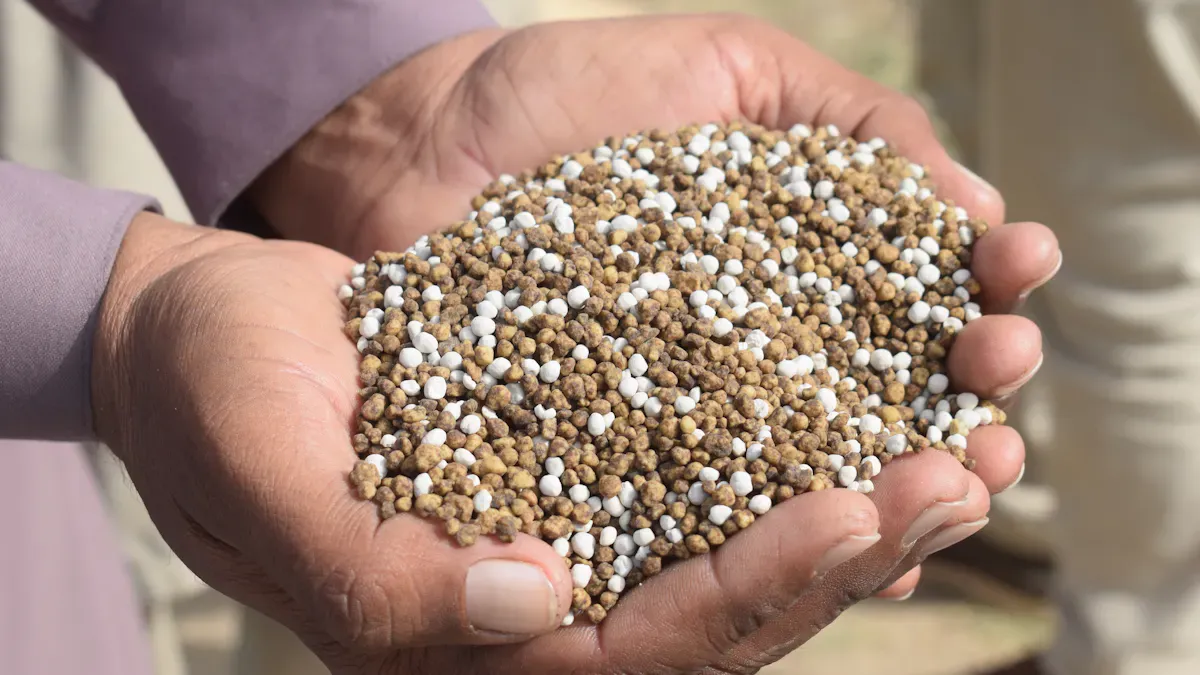
When you see npk fertilizer, it means the product gives plants three main nutrients. NPK stands for nitrogen, phosphorus, and potassium. Each one helps plants in a special way.
Nitrogen makes leaves green and helps them grow. Plants need it for photosynthesis.
Phosphorus helps roots grow strong and makes more flowers. It also moves energy inside the plant.
Potassium helps plants stay healthy and fight diseases. It also makes fruits and flowers better.
NPK fertilizer has these nutrients in different chemical forms. The right mix gives plants what they need at every stage.
Shandong Jinmai Biotechnology Co., Ltd. makes a high-quality npk fertilizer. It uses pure materials and modern technology. It dissolves fast in water, so plants get nutrients quickly. The formula has nitrogen, phosphorus, potassium, and micronutrients. These extra nutrients help plants from seed to harvest.
Micronutrients are important for plant health. They help plants fight off diseases and handle stress. They also help with things like moving electrons and copying DNA. Using fertilizer with both macronutrients and micronutrients helps crops grow strong and give good yields.
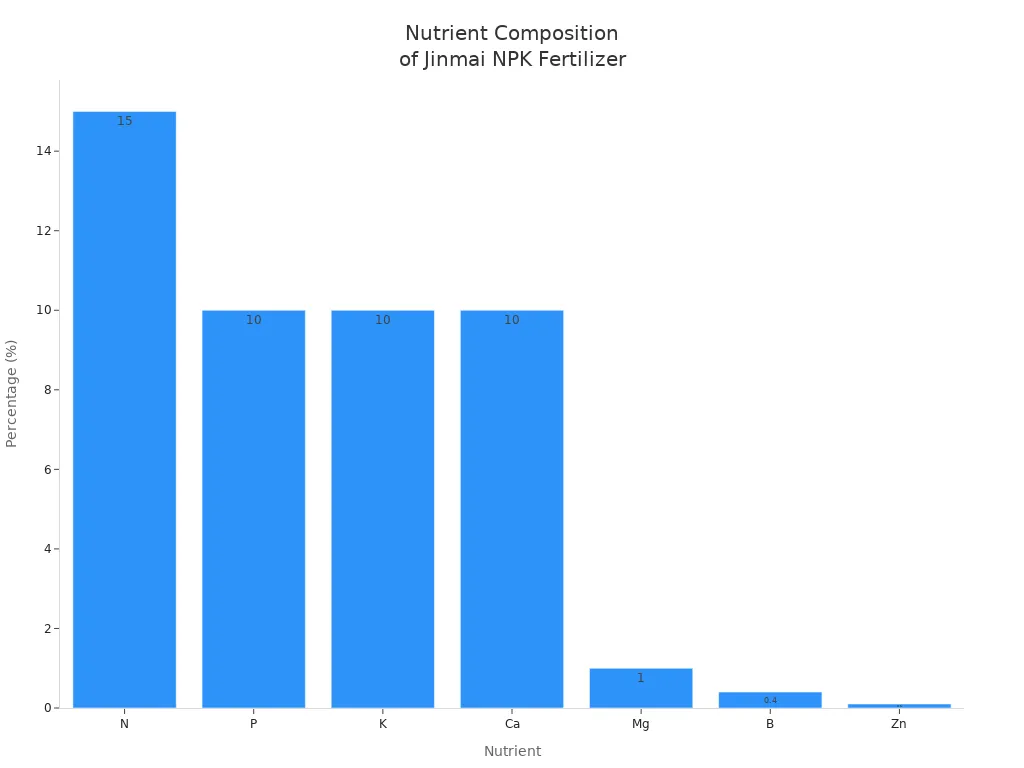
The n-p-k ratio shows how much of each nutrient is in the fertilizer. For example, 15-10-10 means 15% nitrogen, 10% phosphorus, and 10% potassium. This helps you pick the right fertilizer for your plants.
Here is a table with the nutrients in Shandong Jinmai's npk fertilizer:
You can pick different n-p-k ratios for different crops and growth stages. For example, 16-16-8 is good for starting roots and early growth. If your plants need more nitrogen, use 30-0-0. For fruit growth, 0-0-62 works best. Shandong Jinmai makes special formulas for these needs.
NPK Formula | Application Stage | Purpose |
|---|---|---|
16-16-8 | Basal Application | Promotes root establishment and early growth |
30-0-0 (Urea) | Top Dressing | Provides nitrogen boost during vegetative stage |
0-0-62 (Potash) | Top Dressing | Ensures strong fruit development in later stages |
12-24-12 | Specific Soil Condition | Phosphorus-rich for root development in acidic soils |
20-20-0 | Specific Soil Condition | Balanced nutrition for rice in flooded conditions |
Balanced npk fertilizer helps plants use nutrients better and makes fertilizer work well. Studies show the right n-p-k ratio can make crops grow 15%-20% more and improve fruit. Potassium helps plants handle drought and disease. Using balanced nutrients can give a 3% bigger crop and use less fertilizer.
Tip: Pick an npk fertilizer with a ratio that fits your crop's stage and soil. This helps your plants grow well and give more food.
You can use Shandong Jinmai's npk fertilizer with drip irrigation, sprinklers, or by spraying on leaves. Plants take in the nutrients fast, which saves time and work. The balanced nutrients and micronutrients help crops grow strong and give bigger harvests.
If you wonder why these nutrients are important, think about how each one helps your plants. NPK fertilizer gives your garden what it needs to grow well. You need strong roots, green leaves, and lots of flowers. Knowing why these nutrients matter helps you succeed in gardening.
Nitrogen helps plants grow tall and leafy. It makes leaves green by helping chlorophyll work. Chlorophyll lets plants use sunlight for energy. Leafy greens need more nitrogen in their fertilizer. The right amount of nitrogen makes plants lush and healthy. Here is a table showing what each nutrient does:
Nutrient | Role in Plant Development |
|---|---|
Nitrogen | Needed for leafy growth; helps chlorophyll make leaves green and strong. |
Phosphorus | Needed for flowers and fruit; helps plants make more flowers and healthy fruit. |
Potassium | Makes roots stronger; helps plants take up water, fight disease, and handle stress. |
Phosphorus is important for strong roots and bright flowers. It helps plants move energy and build DNA. Fertilizer with enough phosphorus helps plants make more flowers and fruit. Phosphorus also helps roots grow deeper and stronger. Cold soil can stop plants from taking up phosphorus. This can cause purple leaves or slow growth. Phosphorus changes how roots look and grow so they find nutrients better.
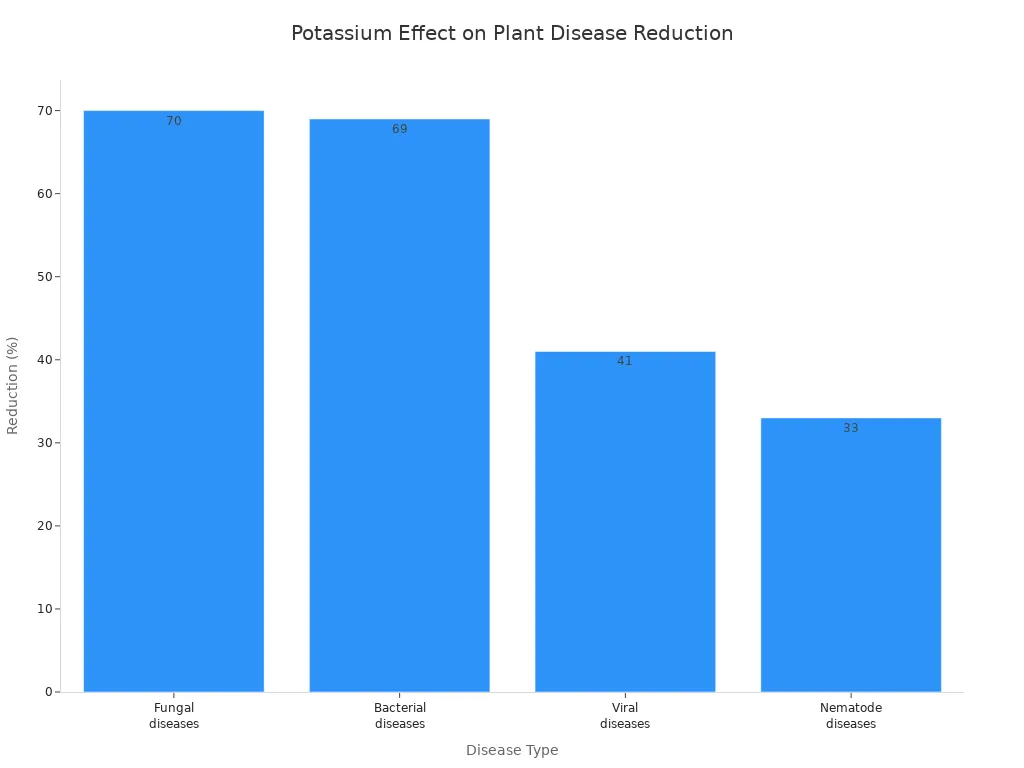
Potassium keeps plants healthy. It helps them fight diseases and handle stress like drought or cold. Potassium helps plants move water and nutrients inside their cells. Fertilizer with enough potassium makes stems stronger and fruit better. Potassium can lower plant diseases a lot. Look at the chart to see how potassium reduces disease:
If plants do not get enough npk nutrients, problems happen. Here are some signs:
Nitrogen deficiency: Lower leaves turn yellow, plants stop growing, and old leaves may die.
Phosphorus deficiency: Leaves turn purple, roots stay small, and growth slows down.
Potassium deficiency: Leaf edges turn yellow or brown, and leaves may curl or die.
Watch for these signs in your garden. Using the right npk fertilizer helps you avoid these problems and keeps your plants strong.
When you pick up a bag of plant fertilizer, you see three numbers on the label. You might wonder, what do the numbers on fertilizer mean? These numbers show the percentage by weight of the primary nutrients: nitrogen, phosphorus, and potassium. The first number is nitrogen (N), the second is phosphorus (P), and the third is potassium (K). For example, a 15-10-10 fertilizer contains 15% nitrogen, 10% phosphorus, and 10% potassium.
The NPK label tells you the ratio of nutrients your plants need.
A complete fertilizer for plants has all three nutrients.
Nitrogen helps leaves grow green and strong.
Phosphorus supports root growth and flowers.
Potassium keeps plants healthy and helps fruit develop.
Tip: Always check what do the numbers on fertilizer mean before you buy. This helps you choose the right fertilizer for your garden.
You need to match the fertilizer to your plant's needs. Different npk ratios work best for different crops and growth stages. Shandong Jinmai offers a range of npk fertilizers to fit your needs. Before you apply fertilizer, test your soil. Soil testing shows what nutrients your soil has and what it needs. This step helps you avoid over-fertilizing and improves your yield.
Here is a table to help you choose the right fertilizer for common plants:
Plant Type | Recommended NPK Ratio |
|---|---|
Leafy Vegetables | 7-3-3 |
Fruiting Plants | 5-10-10 or 10-20-10 |
You can also adjust your fertilizer based on the plant's growth stage:
Fertilizer | NPK Ratio | Best Application Stage | Crop Examples | Benefits |
|---|---|---|---|---|
18 5 10 | 18-5-10 | Early growth | Wheat, maize, rice, leafy vegetables | Fast leaf growth |
15 5 10 | 15-5-10 | Mid-growth | Potatoes, tomatoes, pulses | Balanced growth |
8 10 8 | 8-10-8 | At planting | Root crops, seedlings | Strong roots |
To get the best results, follow these steps:
Measure your garden area.
Calculate how much fertilizer you need. For example, if you need 2 pounds of nitrogen and your fertilizer has 10% nitrogen, use 20 pounds for 1,000 square feet.
Adjust the amount for your garden size.
Use drip irrigation for better fertilizer uptake.
Always follow the application rates on the label.
Avoid common mistakes like misunderstanding npk numbers or skipping soil tests.
If you want healthy plants and a good harvest, choose the right fertilizer and use it at the right time. Shandong Jinmai’s plant fertilizer range makes it easy to find the best match for your crops.
You have learned that NPK means nitrogen, phosphorus, and potassium. These nutrients help plants grow strong and stay healthy. If you know about NPK, you can choose the best fertilizer for your garden or farm.
The right mix of nutrients keeps plants healthy.
Using too much fertilizer wastes money and hurts nature.
Knowing NPK numbers helps you pick what your plants need.
Benefit of Watching NPK | What It Means |
|---|---|
Healthier soils | Soils do not wash away or get packed down. |
Using nutrients right | You save money and help the earth. |
Always look at the NPK label before you buy fertilizer. Pick good brands like Shandong Jinmai Biotechnology Co., Ltd. for better plants.
NPK stands for Nitrogen, Phosphorus, and Potassium. These are the three main nutrients your plants need to grow strong and healthy.
Test your soil first. Then, match the NPK ratio to your plant’s needs. Leafy plants need more nitrogen. Flowering or fruiting plants need more phosphorus and potassium.
You can use NPK fertilizer for most plants. Choose the right ratio for each type. For example, vegetables, flowers, and fruit trees may need different mixes.
Check the label for instructions. Most gardens need fertilizer every 4 to 6 weeks during the growing season. Do not over-fertilize.
Water-soluble NPK fertilizer, like the one from Shandong Jinmai, dissolves quickly. Your plants absorb nutrients faster. This helps you save time and get better results.


