
T: +86-400-0987187
E: info@sdjinmai.com
E: info@sdjinmai.com
No. 6888 Jiankang East Street, High-tech Zone, Weifang, Shandong, China

Views: 0 Author: Site Editor Publish Time: 2026-07-23 Origin: Site
Humic Acid is widely used in modern crop production to improve the root-zone environment, support nutrient availability, and strengthen overall soil fertility management. However, the effectiveness of Humic Acid does not depend only on product quality or application rate. Timing also plays an important role.
Applying Humic Acid at the right stage allows growers to match its benefits with the actual needs of the soil and crop. It may be used before planting to prepare the soil, during transplanting to support root establishment, or throughout crop development to improve nutrient use. A suitable Humic Acid Fertilizer can also be applied before or after environmental stress.
The best application time therefore depends on the crop stage, soil condition, production system, and intended purpose.
 |  |  |  |
Determining the best time to apply Humic Acid Fertilizer depends on the crop’s growth stage, soil condition, and the specific purpose of the application. Rather than being limited to a single treatment period, Humic Acid can be incorporated into the crop management program whenever the soil or root system requires additional support.
Humic Acid can be applied at several important points during a crop production cycle. The most common application periods include:
Before planting or sowing
During transplanting
During early root development
During vegetative growth
Before flowering
During fruit setting and enlargement
Before or after environmental stress
There is no single application time that is suitable for every crop and soil. For example, a grower dealing with compacted soil may apply Humic Acid before planting, while a greenhouse vegetable producer may use liquid Humic Acid Fertilizer through drip irrigation during root and vegetative growth.
In many cases, several moderate applications provide more consistent support than one heavy application. This is especially relevant in intensive cropping systems, sandy soils, drip irrigation systems, and soils with low organic matter.
Applying Humic Acid before planting is particularly useful when the primary objective is soil preparation.
At this stage, Humic Acid can be incorporated into the root zone together with base fertilizer, organic fertilizer, compost, or soil conditioners. This gives it time to interact with soil particles and nutrients before active root growth begins.
Pre-plant application is often suitable for soils with:
Low organic matter
Poor water retention
Weak nutrient-holding capacity
Compaction
Repeated cropping problems
Low biological activity
Excessive nutrient loss
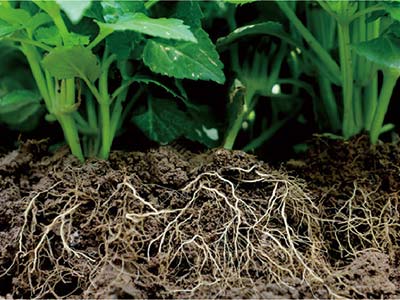
Humic substances can contribute to better soil aggregation and help create a more favorable environment for root development. They may also improve the soil’s ability to retain nutrients and water.
Humic Acid should not be presented as a replacement for organic matter, drainage improvement, or balanced fertilization. It works best as one component of an integrated soil management program.
Pre-plant application may be especially useful in newly prepared fields, degraded agricultural soils, orchards before new tree establishment, and greenhouse soils under intensive cultivation.
For perennial crops, Humic Acid Fertilizer may also be applied around the active root zone before a new growth cycle begins.
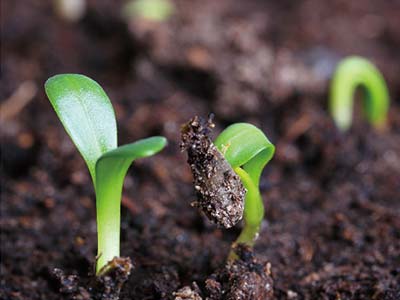
Transplanting is one of the most important times to apply Humic Acid because young plants are adjusting to a new root environment.
During transplanting, roots may experience temporary damage, moisture changes, temperature differences, and reduced nutrient uptake. Humic Acid can be applied through root drenching, drip irrigation, or transplant water to support the establishment process.
A Humic Acid Fertilizer used during transplanting should ideally be fully soluble, easy to dilute, and compatible with the irrigation system.
The main objective at this stage is not to force rapid top growth. Instead, the product should help create conditions that support new root formation and efficient nutrient absorption.
Humic Acid is commonly used during transplanting for:
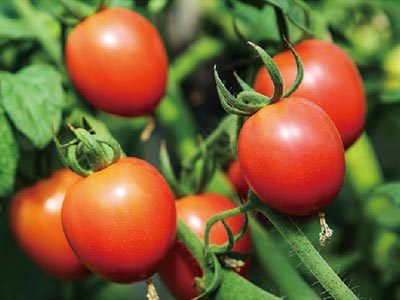
Tomatoes
Peppers
Cucumbers
Strawberries
Melons
Greenhouse vegetables
Fruit tree seedlings
Nursery crops
Application should be made to moist soil whenever possible. Applying a concentrated solution directly to dry or damaged roots may reduce the expected benefit.
The early root development stage is another suitable period for Humic Acid application.
Once seedlings or transplants begin active growth, their demand for nutrients increases. A healthy root system is required to absorb nitrogen, phosphorus, potassium, calcium, magnesium, and trace elements from the soil or nutrient solution.
At this stage, Humic Acid may be applied together with an early-stage fertilizer program. It can support nutrient availability and help roots explore a larger volume of soil.
This timing is particularly relevant when crops show:
Slow root development
Weak early growth
Pale leaves
Poor fertilizer response
Limited lateral roots
Uneven establishment
Humic Acid Fertilizer does not directly replace NPK or micronutrient fertilizers. Its role is generally to support the environment in which these nutrients are retained, transformed, and absorbed.
For drip-irrigated crops, smaller and repeated applications are often more practical than one high-rate treatment.
 |  |  |  |
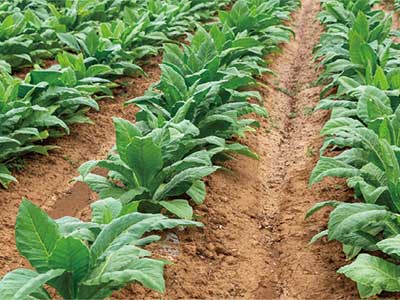
Humic Acid can continue to be used during vegetative growth, when crops are producing leaves, stems, and branches.
During this period, plants require a stable nutrient supply. If soil structure is poor, moisture fluctuates, or nutrients are easily leached, plant development may become uneven.
Applying Humic Acid Fertilizer together with routine fertigation may help maintain root activity and improve the efficiency of the nutrition program.
This stage is especially important for crops grown in:
Sandy soil
Low-organic-matter soil
High-intensity greenhouse systems
Areas with frequent irrigation
Fields with repeated fertilizer applications
Soils with weak nutrient retention
Application frequency should be adjusted according to crop type, product concentration, irrigation schedule, and soil test results.
The period before flowering is a critical transition stage. Crops shift from vegetative growth toward reproductive development, and their nutrient requirements change.
Applying Humic Acid before flowering can help maintain root activity as plants begin to demand more phosphorus, potassium, boron, zinc, and other nutrients involved in flowering and fruit formation.
At this stage, Humic Acid Fertilizer is usually combined with a balanced nutritional program rather than used alone.
For fruiting vegetables and orchard crops, pre-flowering application may help maintain steady nutrient uptake during a period when stress or nutrient imbalance can affect later development.
Growers should avoid excessive nitrogen at this stage, because overly strong vegetative growth may compete with flowering. The Humic Acid application should therefore fit the overall fertilizer plan.
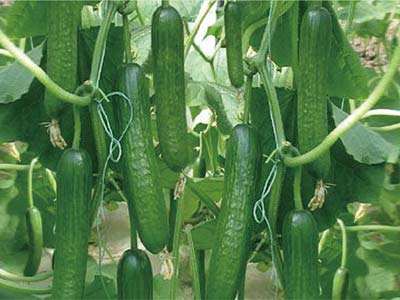
Humic Acid may also be applied during fruit setting and fruit enlargement.
During these stages, crops have a high demand for potassium, calcium, magnesium, and other nutrients. Active roots are essential because the plant must continue absorbing nutrients while supporting developing fruit.
A suitable Humic Acid Fertilizer may be applied through fertigation together with stage-specific water-soluble fertilizers.
The purpose is to support nutrient availability and root-zone conditions, not to claim that Humic Acid alone determines fruit size, yield, sweetness, or color.
For tomatoes, peppers, grapes, citrus, apples, mangoes, and melons, application may be divided into several moderate treatments during fruit development.
The rate and frequency should be adjusted to crop load, soil condition, water quality, and the fertilizer formulation being used.
Humic Acid can be applied before expected environmental stress, particularly when growers know that unfavorable conditions are approaching.
Possible stress conditions include:
Drought
High temperature
Low temperature
Salinity
Transplant stress
Irregular irrigation
Temporary nutrient deficiency
Applying Humic Acid before stress may help improve root-zone conditions and support continued nutrient uptake.
However, it should not be described as a complete solution to drought, salinity, or temperature stress. Irrigation management, drainage, soil salinity control, crop selection, and balanced nutrition remain essential.
Preventive application is usually more effective than waiting until the crop has already suffered severe damage.
Humic Acid may also be used after moderate stress to support recovery.
For example, application may be considered after transplanting, a short drought period, excessive heat, temporary fertilizer stress, or minor root-zone disturbance.
At this stage, growers should first correct the main cause of the problem. If the soil is waterlogged, irrigation should be adjusted. If salinity is excessive, drainage and leaching may be required. If roots are severely diseased, Humic Acid alone will not solve the problem.
Once the primary issue is under control, a moderate Humic Acid Fertilizer application may help support root activity and nutrient absorption.
Avoid using excessive concentrations on severely stressed plants. Weak roots are not always able to respond well to strong fertilizer solutions.
 |  |  |  |
Soil condition is an important factor when determining application timing.
In compacted soil, Humic Acid is commonly applied before planting and then repeated during early root development. It should be combined with physical soil improvement, organic matter, and proper irrigation.
Sandy soil often loses water and nutrients quickly. In this condition, low-rate and repeated Humic Acid applications may be more suitable than one large application.
Using Humic Acid Fertilizer through fertigation can help growers integrate it into routine irrigation and nutrient management.
Soils with low organic matter may benefit from regular Humic Acid application throughout the growing season. However, long-term improvement also requires crop residues, compost, manure, cover crops, or other organic inputs.
In saline soil, Humic Acid may be applied before planting and during root growth as part of a broader salinity management program.
It should not replace drainage, irrigation water testing, salt leaching, or proper fertilizer control.
For soil or drip irrigation application, Humic Acid can usually be applied during normal irrigation periods.
In hot weather, early morning or late afternoon is often preferable. This reduces rapid water loss and helps avoid additional crop stress.
The soil should be moderately moist. Avoid applying Humic Acid Fertilizer to severely dry soil unless irrigation is provided at the same time.
For fertigation systems, the product should be diluted properly and injected according to irrigation equipment requirements. The system should usually be flushed with clean water afterward.
If a product is intended for foliar application, growers should follow the label instructions. Humic Acid is generally used more commonly in the soil or root zone, while smaller-molecule fulvic acid products are often more suitable for foliar use.
Application frequency depends on:
Product concentration
Crop type
Growth stage
Soil condition
Irrigation method
Water quality
Fertilizer program
Production intensity
A practical program may include applications before planting, after transplanting, during early root growth, and before flowering or fruit development.
In drip irrigation systems, growers may divide the total amount into several smaller applications. This approach can provide more consistent root-zone support and reduce the risk of overapplication.
There is no universal rate or interval for every product. Always follow the product label, local agronomic guidance, soil test data, and crop requirements.
Humic Acid should not be applied without considering field conditions.
Avoid or delay application when:
Soil is severely waterlogged
Roots are affected by serious rot or disease
Plants are under extreme heat stress
The product has not been tested for compatibility with other inputs
Irrigation water causes precipitation or blockage
The application rate exceeds label recommendations
Do not assume that a higher concentration will produce a better result. Excessive application may waste product, disturb the fertilizer program, or create irrigation-system problems.
Before tank mixing Humic Acid Fertilizer with calcium, strong acids, strong alkaline materials, pesticides, or concentrated fertilizers, conduct a small compatibility test.
The product type should match the application stage and production system.
For pre-plant soil improvement, growers may focus on humic acid concentration, organic matter contribution, and soil-conditioning value.
For transplanting and early root development, a highly soluble liquid formulation may be easier to use through root drenching or drip irrigation.
For fertigation, the product should offer good water solubility, low residue, stable dilution, and compatibility with filters and irrigation equipment.
In hard-water or saline-water areas, product stability should also be evaluated before large-scale use.
The most suitable Humic Acid Fertilizer is not always the one with the highest humic acid percentage. Raw material source, extraction method, formulation stability, application system, crop type, and intended function should all be considered.
The best time to apply Humic Acid depends on what the grower wants to achieve.
For soil preparation, it can be applied before planting. For root establishment, it is useful during transplanting and early growth. For nutrient support, it may be integrated into vegetative, flowering, and fruit-development programs. Humic Acid Fertilizer can also be used before or after moderate environmental stress when combined with proper irrigation, soil, and crop management.
Rather than treating Humic Acid as a one-time treatment, growers should integrate it into a complete soil fertility and plant nutrition strategy.
Jinmai Biotech supplies Humic Acid and fulvic acid formulations designed for soil application, root-zone management, and fertigation systems. We also support customized concentrations, formulations, and packaging for different crops and markets. Contact us to identify a suitable Humic Acid Fertilizer solution for your agricultural program.


