
T: +86-400-0987187
E: info@sdjinmai.com
E: info@sdjinmai.com
No. 6888 Jiankang East Street, High-tech Zone, Weifang, Shandong, China

Views: 0 Author: Site Editor Publish Time: 2025-10-31 Origin: Site
Fertilizers are a cornerstone of modern agriculture, providing essential nutrients that crops need to thrive. Among them, NPK water-soluble fertilizer has gained widespread popularity due to its rapid nutrient availability, ease of application, and compatibility with precision farming techniques. Understanding how is NPK fertilizer made and why it plays a crucial role in crop nutrition is essential for farmers, distributors, and agronomists alike.
NPK water-soluble fertilizers are specially formulated compounds that contain three primary macronutrients:
Nitrogen (N) – Promotes leafy growth and overall plant vigor.
Phosphorus (P) – Supports root development, flowering, and fruiting.
Potassium (K) – Enhances disease resistance, improves water retention, and strengthens stems.
Unlike conventional granular fertilizers, water-soluble NPK fertilizers dissolve easily in water, allowing nutrients to be absorbed directly through soil irrigation systems or foliar spraying. This ensures rapid uptake and minimizes nutrient loss due to leaching.
NPK water-soluble fertilizers have become essential in modern agriculture because they provide a balanced and easily absorbable source of the three main nutrients—nitrogen (N), phosphorus (P), and potassium (K). Understanding their advantages helps farmers, agronomists, and distributors make informed decisions for crop management.
Rapid Nutrient Absorption
Water-soluble NPK fertilizers dissolve completely in water, allowing plants to absorb nutrients immediately through the roots or leaves. This rapid uptake accelerates growth, particularly during critical stages such as vegetative growth, flowering, and fruiting. Crops benefit from a quick boost in energy and essential nutrients, leading to healthier plants and higher yields.
Precision Nutrition
Another major advantage is the ability to tailor nutrient ratios to specific crop needs or growth stages. By adjusting the N-P-K ratio, farmers can target nutrient requirements precisely—for instance, increasing nitrogen during vegetative growth or potassium during fruit development. Precision nutrition not only improves crop quality but also reduces waste and enhances efficiency.
Reduced Environmental Impact
Because nutrients are fully soluble and rapidly absorbed, there is less risk of nutrient runoff into surrounding soil and water bodies. This minimizes environmental pollution and helps comply with sustainable farming practices. Water-soluble fertilizers also reduce leaching losses, ensuring that a higher percentage of applied nutrients actually benefits the crop.
Versatile Application Methods
NPK water-soluble fertilizers can be applied using a wide range of methods, making them suitable for various farming systems. They are compatible with drip irrigation, fertigation, foliar spraying, and hydroponic setups. This flexibility allows farmers to integrate fertilizers seamlessly into modern irrigation systems, reducing labor requirements while maintaining uniform nutrient delivery.
Compatibility and Customization
Water-soluble NPK fertilizers can be blended with other macro- or micronutrients to create custom formulations. Adding elements such as magnesium, calcium, zinc, or boron helps address specific soil deficiencies and crop requirements. This adaptability makes them suitable for high-value crops, greenhouse vegetables, fruits, flowers, and other precision agriculture operations.
Collectively, these advantages make water-soluble NPK fertilizers an indispensable tool for modern crop management, maximizing yield, efficiency, and sustainability.
Understanding how is NPK fertilizer made provides insight into why water-soluble formulations perform so effectively. Production involves multiple stages, combining chemical reactions, material blending, granulation, and strict quality control measures. Each step contributes to the final fertilizer’s solubility, nutrient uniformity, and field performance.
The basic production steps include:
Raw Material Selection
Chemical Synthesis or Blending
Granulation
Drying and Cooling
Screening and Packaging
Quality Testing
The foundation of high-quality NPK water-soluble fertilizer begins with carefully selecting raw materials. Common sources include:
Nitrogen sources: Urea, ammonium nitrate, ammonium sulfate
Phosphate sources: Monoammonium phosphate (MAP), diammonium phosphate (DAP), phosphoric acid
Potassium sources: Potassium chloride (KCl), potassium sulfate (K₂SO₄)
Optional micronutrients: Magnesium, calcium, zinc, iron, boron
High purity and uniform particle size are essential. Impurities or irregular particles can reduce solubility, interfere with chemical reactions, and affect nutrient availability. Selecting the right raw materials also ensures consistency in the final N-P-K ratio, which is critical for precision agriculture.
Once raw materials are prepared, manufacturers either chemically synthesize or physically blend them to achieve the desired N-P-K ratio:
Chemical Synthesis:
Nitrogen, phosphorus, and potassium compounds may undergo controlled chemical reactions to form homogeneous compounds.
Acidulation and neutralization processes are applied to stabilize the nutrients, ensuring water solubility and preventing unwanted precipitation.
Physical Blending:
In some cases, powders or granules of each nutrient are mechanically blended in precise ratios.
Uniform blending ensures that each granule or batch contains a balanced composition of N, P, and K, providing consistent results when applied in the field.
Many modern facilities combine both methods to produce high-purity, fully water-soluble fertilizers, ensuring that each batch meets stringent agronomic standards.
Granulation is the process of forming fertilizer particles into uniform, free-flowing granules suitable for storage, transport, and precise application. Common granulation techniques include:
The nutrient blend is moistened with water or liquid phosphates.
Granules are formed in rotating drums or fluidized bed granulators.
Wet granulation produces highly soluble, uniform particles ideal for irrigation and fertigation systems.
Fine fertilizer powders are sprayed with liquid nutrients or binders.
Granules are dried while rotating in drums or tower systems, maintaining shape and size uniformity.
Spray granulation allows precise control over particle diameter and density.
High-pressure extrusion forms prills or cylindrical granules.
Granules produced are strong enough to resist caking during storage but remain fully soluble in water.
This method is often used for specialized formulations or high-concentration fertilizers.
Granules exiting the granulation stage contain moisture, which must be reduced to prevent caking, microbial growth, or chemical degradation:
Drying: Hot air or rotary dryers remove excess moisture efficiently.
Cooling: Mechanical or air cooling stabilizes granules, making them suitable for handling and storage.
This stage is critical for maintaining free-flowing properties, solubility, and uniformity in the final product.
To ensure quality and consistency, granules are screened to remove oversized or undersized particles:
Screening: Vibrating or rotary screens classify granules for uniformity, ensuring even application in irrigation or spraying systems.
Packaging: Fertilizer is packed in moisture-proof bags, drums, or bulk containers. Modern facilities often use automated filling, sealing, and labeling systems.
Proper packaging protects against contamination, mechanical damage, and moisture, maintaining the fertilizer’s quality until it reaches the end user.
The final stage involves rigorous quality control:
Nutrient content: Verified against labeled N-P-K ratios.
Solubility tests: Ensures rapid dissolution in water for immediate plant uptake.
Particle size analysis: Prevents clogging in irrigation systems and ensures uniform application.
Moisture and stability tests: Confirms long shelf life and prevents caking.
This meticulous approach guarantees that the fertilizer performs reliably under field conditions and provides optimal crop nutrition.
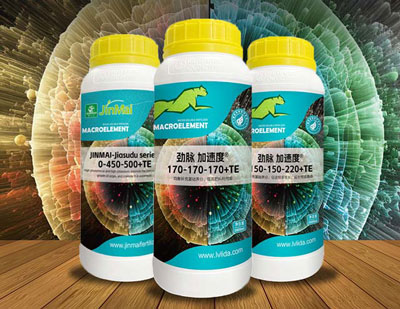
Quality control ensures that npk water soluble fertilizer meets strict agricultural and chemical standards:
Nutrient Content: Verified against labeled N-P-K ratios.
Solubility: Tested to ensure rapid dissolution in water.
Particle Size Distribution: Ensures uniform application and prevents clogging in irrigation systems.
Moisture and Stability: Checks prevent caking and degradation over time.
Regular testing guarantees farmers receive consistent, high-quality fertilizer that performs as expected.
Several factors determine the effectiveness of NPK water-soluble fertilizer:
Raw Material Purity: Impurities can reduce solubility and crop uptake.
Production Technology: Advanced granulation and mixing ensure uniformity.
Storage Conditions: Moisture, temperature, and contamination affect shelf life.
Nutrient Ratio Accuracy: Correct N-P-K balance supports specific crop requirements.
High-quality fertilizer ensures optimal crop growth, higher yields, and minimal environmental impact.
NPK water-soluble fertilizers are versatile and widely used in:
Vegetables and fruits: Enhances flowering, fruiting, and overall yield.
Cereal crops: Promotes strong vegetative growth and grain quality.
Greenhouses and hydroponics: Ideal for drip irrigation and fertigation systems.
Ornamental plants and turf: Supports vibrant growth, color, and disease resistance.
Farmers can tailor nutrient ratios to crop stage (vegetative, flowering, or fruiting) for precision nutrition.
Rapid nutrient availability accelerates plant growth.
Customizable formulations match crop-specific requirements.
Compatible with modern irrigation systems, reducing labor costs.
Reduces nutrient losses from runoff and leaching.
Improves yield and crop quality, maximizing profitability.
The combination of efficiency, flexibility, and sustainability makes water-soluble NPK fertilizers a critical tool in modern agriculture.
Understanding how is NPK fertilizer made reveals why npk water soluble fertilizer is so valuable in modern farming. From careful raw material selection, chemical synthesis, and granulation to drying, screening, and rigorous quality testing, every step ensures high solubility, precise nutrient ratios, and reliability in the field.
For those seeking high-quality NPK water-soluble fertilizers, Shandong Jinmai Biotechnology Co., Ltd. offers a wide range of products designed to meet diverse agricultural needs. With advanced production technology, strict quality control, and customizable nutrient formulations, they provide solutions that improve crop performance while supporting sustainable farming practices. Farmers and distributors looking for reliable fertilizer solutions can explore their offerings for optimal results in both yield and efficiency.


