T: +86-400-0987187
E: info@sdjinmai.com
No. 6888 Jiankang East Street, High-tech Zone, Weifang, Shandong, China


| Quantity: | |
|---|---|

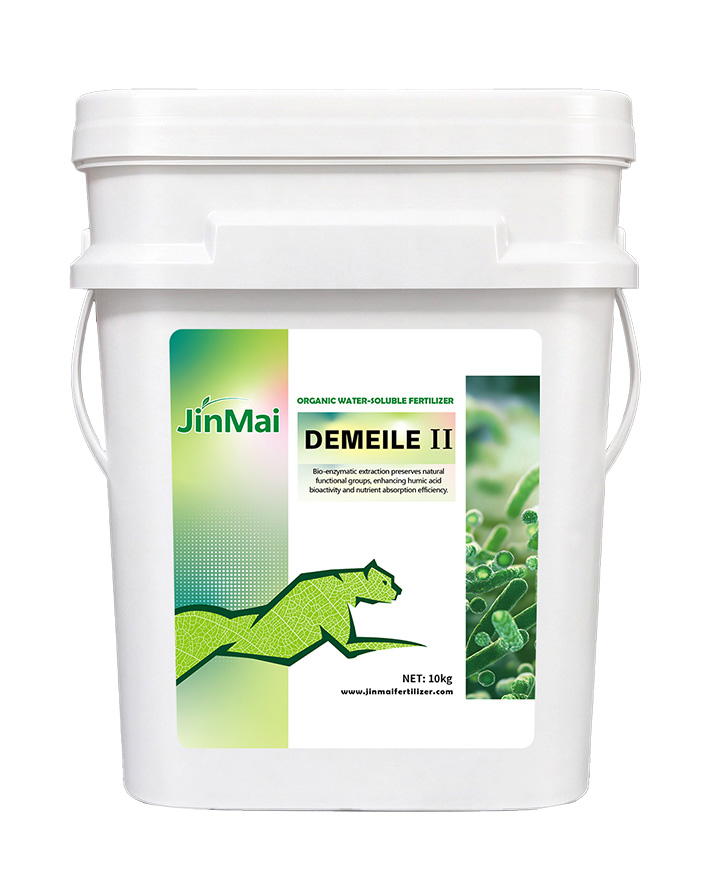
JINMAI DEMEILE® Bio-Enzymatic Wood Peat Humic Acid Fertilizer is a high-activity liquid humic acid fertilizer developed from natural Russian wood peat through advanced microbial transformation and enzymatic processing. Combining naturally derived humic substances with biological activation technology, it is designed to improve soil conditions, stimulate root development, and optimize nutrient availability throughout the crop growth cycle.
Unlike conventional humic acid products primarily manufactured through alkaline extraction, this product utilizes a controlled bio-enzymatic process to transform complex organic materials into biologically active humic substances while helping retain characteristic natural molecular structures and functional groups.
With 170 g/L humic acid, including 45 g/L fulvic acid, and 140 g/L organic matter, this concentrated liquid formulation provides a multifunctional solution for soil improvement and crop nutrition management. Its active organic components support soil aggregation, nutrient retention, rhizosphere development, and more efficient utilization of nitrogen, phosphorus, potassium, calcium, magnesium, and micronutrients.
Suitable for fruit trees, vegetables, field crops, cash crops, and horticultural plants, it can be incorporated into regular soil fertility programs to support healthier roots and more sustainable crop production.
| Formula | Organic Matter 140g/L, Humic Acid 170g/L, Fulvic Acid 45g/L |
| Appearance | Black Liquid |
Model Number | 10kg |
Release Type | Slow |
| Characteristic | 100% Water Soluble |
Function | Improves Soil Structure, Promotes Root Growth, and Enhances Nutrient Uptake |
Application | Fruit Trees, Vegetables, Field Crops, Cash Crops, Berries, Ornamental Plants and Flowers, Turfgrass and Lawns |
| Origin | Shandong, China |
| OEM&ODM | Logo, Label, Formula, Package Customized |
Promotes soil aggregation and helps improve soil porosity, aeration, and water retention. Supports better soil tilth and creates a more favorable growing environment for crop roots, particularly in soils with poor structure.
Humic substances contribute to cation exchange capacity and help retain essential plant nutrients in the root zone. This supports nutrient availability and helps reduce nutrient losses associated with leaching under suitable soil conditions.
Supports the development of healthy root systems, including lateral roots and fine roots. A more developed root system provides greater contact with the surrounding soil, helping plants access water and nutrients more effectively.
Helps improve the availability and uptake of nitrogen, phosphorus, potassium, and essential secondary and micronutrients. Can be integrated with conventional fertilizer programs to support more efficient nutrient management.
By improving root-zone conditions and supporting balanced nutrient absorption, the product contributes to stronger vegetative growth, healthier crop development, and improved yield potential throughout the growing season.
 | Fruit Trees⦁ Suitable Crops: Citrus, Apple, Pear, Peach, Nectarine, Plum, Cherry, Mango, Avocado, Kiwifruit ⦁ Function: Supports root regeneration, improves soil conditions around the root zone, and enhances the absorption of nutrients required for flowering, fruit setting, and fruit enlargement. Particularly useful during spring root activation and post-harvest nutrient recovery. |
 | Vegetables⦁ Suitable Crops: Tomato, Pepper, Eggplant, Cucumber, Watermelon, Melon, Pumpkin, Lettuce, Cabbage, Spinach ⦁ Function: Promotes root establishment and supports nutrient uptake during rapid vegetative growth. Helps maintain favorable soil moisture and nutrient conditions, contributing to uniform crop development and continuous growth during production. |
 | Field Crops⦁ Suitable Crops: Corn, Wheat, Rice, Soybean, Cotton, Peanut, Rapeseed ⦁ Function: Improves root-zone soil conditions and supports nutrient utilization during early establishment and vigorous growth. Helps crops develop stronger root systems and maintain balanced nutrient supply during key growth stages. |
 | Cash Crops⦁ Suitable Crops: Potato, Sweet Potato, Sugar Beet, Tobacco, Tea, Coffee ⦁ Function: Supports root and tuber development while improving soil fertility and nutrient retention. Helps maintain favorable conditions during vegetative growth, tuber initiation, and other important nutrient-demanding stages. |
 | Berries⦁ Suitable Crops: Strawberry, Blueberry, Raspberry, Blackberry, Grape ⦁ Function: Supports fine-root development and nutrient absorption, helping maintain healthy plant growth during flowering, fruit development, and repeated harvesting periods. |
 | Ornamental Plants and Flowers⦁ Suitable Crops: Rose, Chrysanthemum, Carnation, Tulip, Lily, Poinsettia ⦁ Function: Helps improve growing media conditions, supports root establishment after transplanting, and promotes balanced vegetative development for healthier ornamental plants. |
 | Turfgrass and Lawns⦁ Suitable Crops: Bermudagrass, Kentucky Bluegrass, Ryegrass, Tall Fescue, Zoysiagras ⦁ Function: Supports soil conditioning, root development, and nutrient retention, helping maintain healthy turf growth and improve the growing environment in frequently managed lawns and landscapes. |
Method | Phenological Period | Dosage | Frequency |
| Foliar Spray | Transplanting, Vegetative Growth, Flowering, Fruit Setting & Fruit Enlargement | Dilute 300–500 times | Every 10-15 days |
| Drip Irrigation | 15–30 L/ha | Every 15-20 days |
Note: The specific usage and dosage can be adjusted according to the differences in regions, crop types, yields, etc, under the advice of technical personnel.
Before Planting and Soil Preparation: Apply during pre-plant soil preparation to improve the organic environment of the planting area, support soil aggregation, and establish favorable conditions for subsequent root development.
At Transplanting and Early Root Establishment: Use during transplanting or shortly after planting to support root establishment, encourage lateral root development, and help young plants adapt to their growing environment.
During Vegetative Growth: Apply during periods of rapid root and shoot development to support nutrient retention, improve nutrient uptake, and maintain balanced crop growth.
Before Flowering and Fruit Setting: Apply before flowering and fruit setting when crop nutrient demand increases. Supporting root activity and nutrient availability at this stage helps maintain healthy plant development and prepares crops for reproductive growth.
During Fruit Enlargement and Tuber Development: Use during fruit expansion, grain filling, or tuber enlargement to support continued nutrient absorption and maintain favorable root-zone conditions during periods of high nutrient demand.
After Harvest and Before the Next Growing Season: Apply after harvest to support soil fertility management, replenish organic inputs, and improve soil conditions for the next crop cycle.
1. Mixing Order: When combining with other products, follow this sequence: water → this product → other products.
2. Compatibility: Compatible with most pesticides. Always conduct a compatibility test before first use.
3. Storage: Store in a cool, well-ventilated place, away from direct sunlight.
4. Safety: Keep out of reach of children; Not for human or animal consumption; In case of eye contact, rinse thoroughly with water and seek medical attention immediately.
Bio-enzymatic wood peat humic acid fertilizer is a liquid organic fertilizer produced from natural wood peat through microbial transformation and enzymatic processing. It contains active humic substances that help improve soil conditions, support root development, and enhance nutrient utilization.
Humic acid fertilizer helps improve soil aggregation, porosity, water retention, and nutrient-holding capacity. It also supports a favorable root-zone environment, making nutrients more accessible to growing plants.
Humic substances help create favorable soil conditions for root development and rhizosphere activity. They support lateral root and fine root development, allowing plants to explore a larger soil volume and absorb water and nutrients more effectively.
Bio-enzymatic humic acid is produced through microbial transformation and enzymatic processing of organic materials, while conventional humic acid is often obtained through alkaline extraction. The biological processing approach offers a different production pathway and helps preserve characteristic natural organic structures and functional groups.
Liquid humic acid fertilizer is suitable for fruit trees, vegetables, field crops, cash crops, berries, ornamental plants, and turfgrass. It helps improve root-zone conditions, support nutrient absorption, and maintain healthy crop development.
The best application periods include pre-plant soil preparation, transplanting, early root establishment, vegetative growth, and before flowering or fruit setting. It can also be applied during fruit enlargement and after harvest to support soil fertility management. Application timing and frequency should be adjusted according to crop requirements and soil conditions.